
Water, Water, Everywhere…
Lessons in rain, drainage, and our first year of learning to manage the land —
When I started watching this field back in January, one of the things I paid close attention to was water. Where did it sit? Where did it drain? Where were the wettest spots?
This field had been commercially farmed for decades, so we knew we were dealing with some pretty serious soil compaction. After watching it through the winter, I finally chose what I thought was a good spot for the flower field. It was technically in the “bowl” of the property, but there were obviously working field tiles underneath it that were moving water away, so I felt pretty good about my decision.
Then came March. We had a fairly dry March, which gave us just enough of a window to start tilling, making beds, and turning this little piece of a commercial field into a flower farm. And then it started raining.
And raining.
And raining.
I don’t know what the official rainfall numbers are for our area this year, but surely some kind of record has been set! There were times when the amount of water sitting in this field was almost unbelievable.
I remember the first time the flower field flooded. I looked out over all those plants I had started from seed, nurtured for months, and finally planted into the ground—and honestly thought it might all be over.
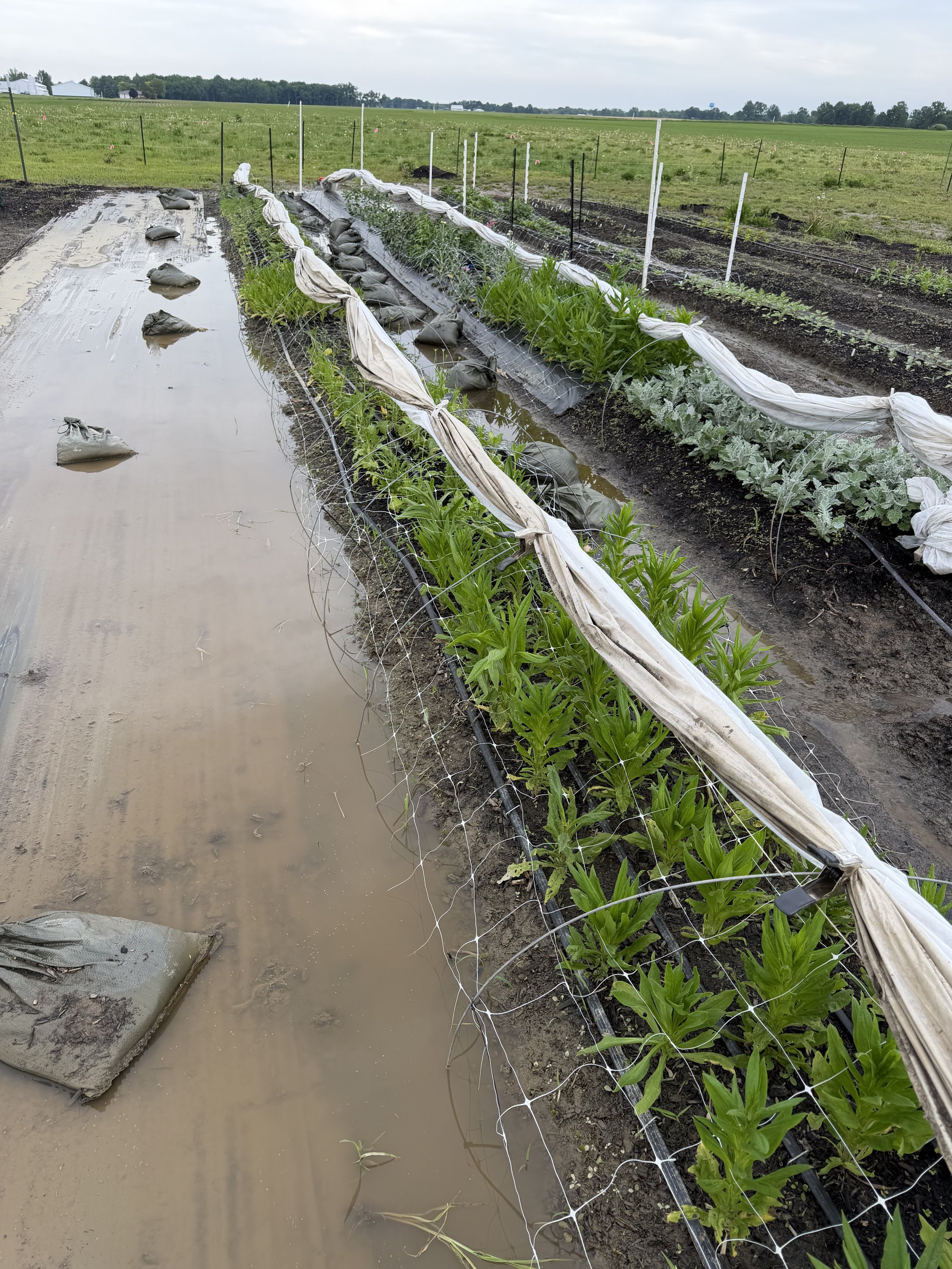
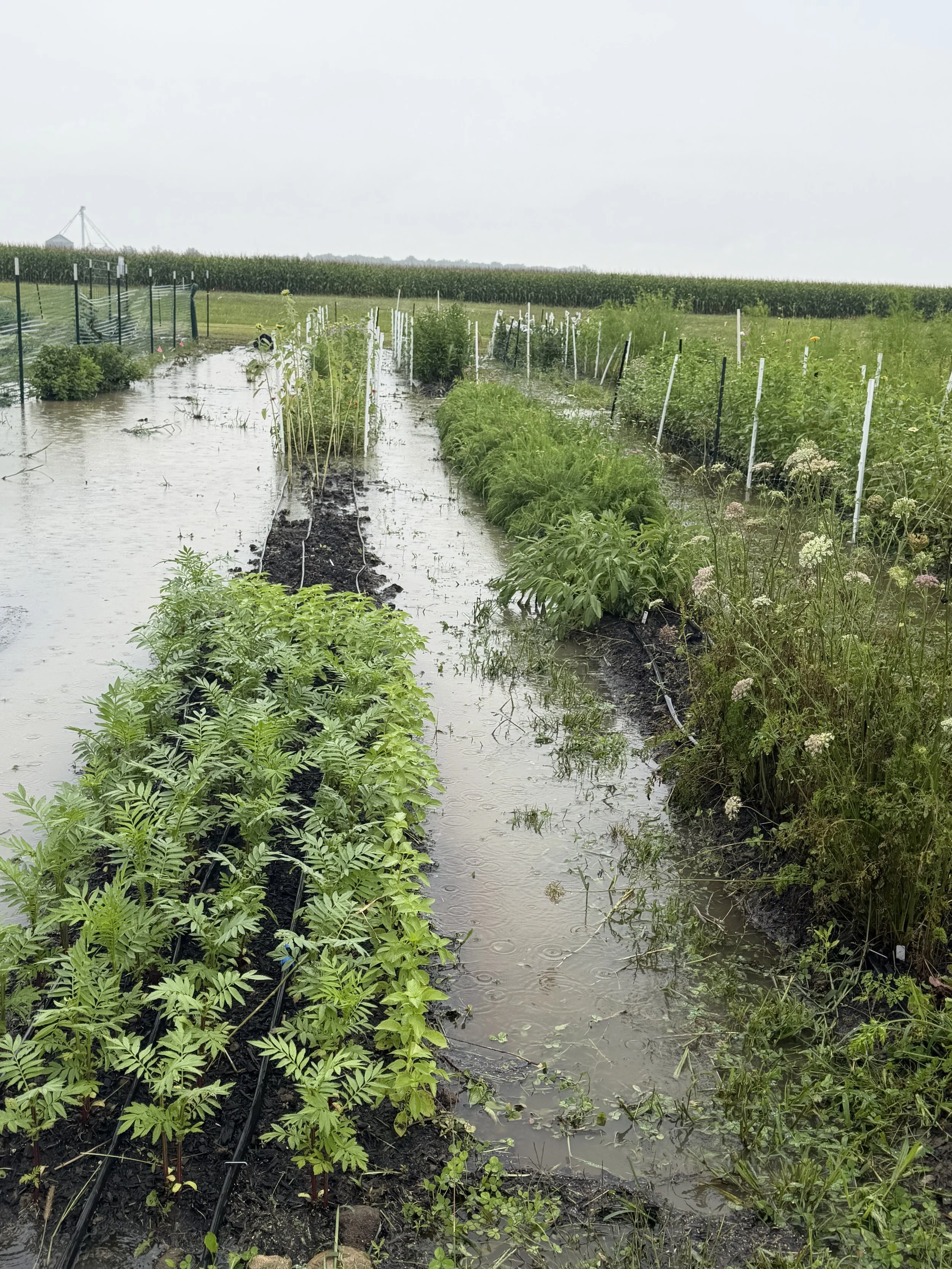
But a couple of days later, the water was gone. And amazingly, most of the flowers were okay. One long row was mildly stunted, but what I thought was going to be a disaster…wasn’t. (Above is also a later photo of flooding that happened)
It’s amazing all the things plants can survive!
Enter Adam. 😍
I should probably back up here and introduce an important person in this whole journey.
My husband, Adam, has been so very generous with his time and efforts and so supportive of all my ideas! And he loves to research.
This has been extremely helpful throughout this whole flower-farming adventure—and, occasionally, maybe just a tiny bit annoying. 😂
While I’ve been researching flowers, varieties, seed starting, harvesting, and all the fun things, Adam has spent an incredible amount of time researching things like soil structure, drainage, and how to bring a heavily farmed field back to life for flower farming.
Early on, he told me we needed to subsoil the field.
It kind of became a joke between us. But he was definitely right!
The problem was that we simply didn’t have enough dry days to get it done before the hundreds of little flower starts desperately needed to get out of their trays and into the ground.
So I created raised beds and planted away.
Then the rains came, the water backed up, and suddenly all of Adam’s research about compaction and subsoiling started looking pretty important.
So, what exactly is subsoiling?
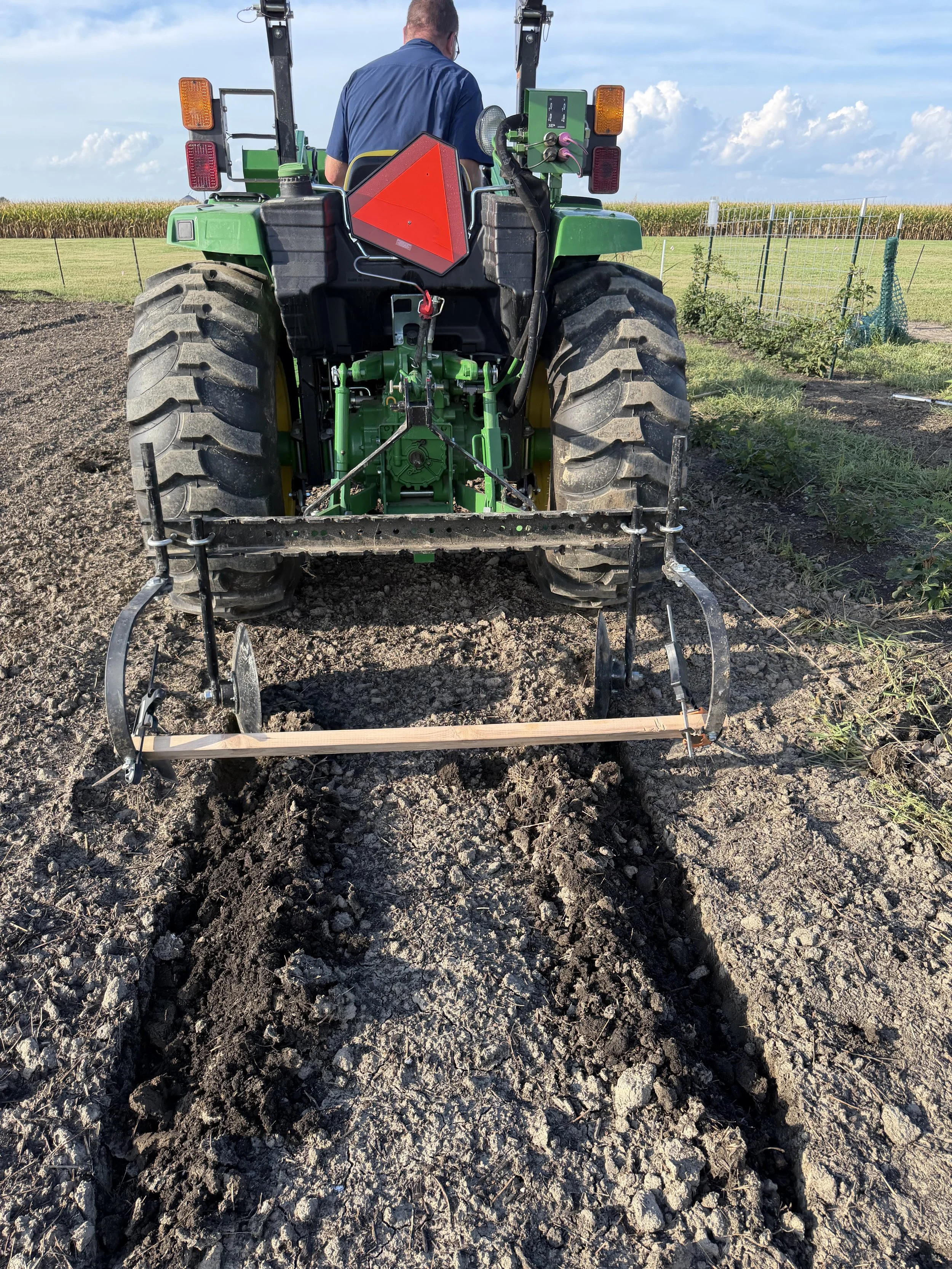
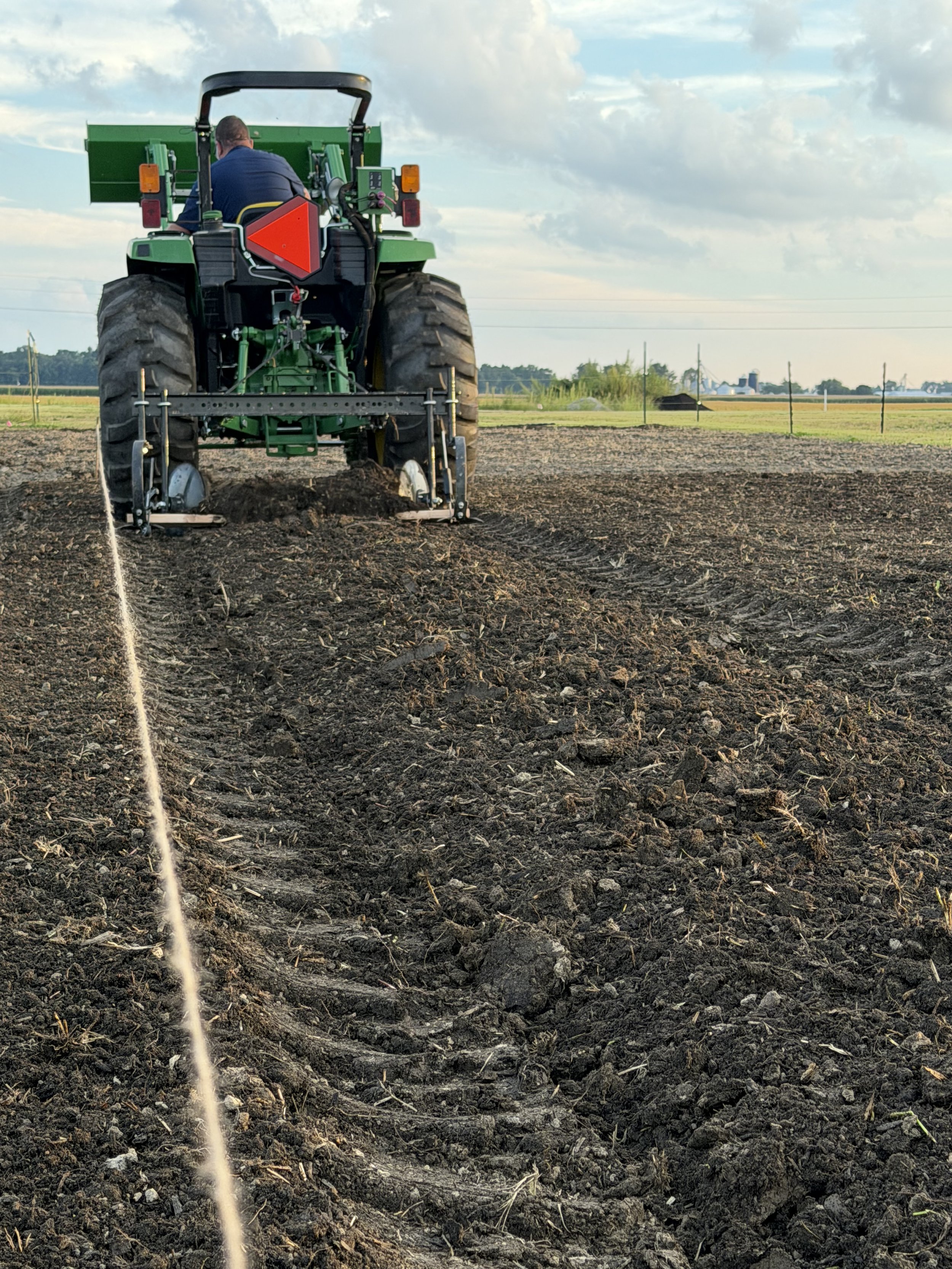
For those of you who, like me not so long ago, have no idea what that means—subsoiling is different from regular plowing or tilling. A subsoiler has a long, narrow shank that reaches deep into the ground—in our case it was 14 inches deep—to break apart the heavily compacted layer of soil underneath, often called hardpan.
Instead of turning all of that soil over, it basically fractures those compacted layers below the surface. This creates pathways for water to move down through the soil instead of sitting on top, while also giving plant roots room to grow deeper.
For an old commercially farmed field with years of compaction—and a new flower farmer who had spent the summer watching entirely too much water sit on top of it—it suddenly made a whole lot of sense.
Working With the Ground We Had
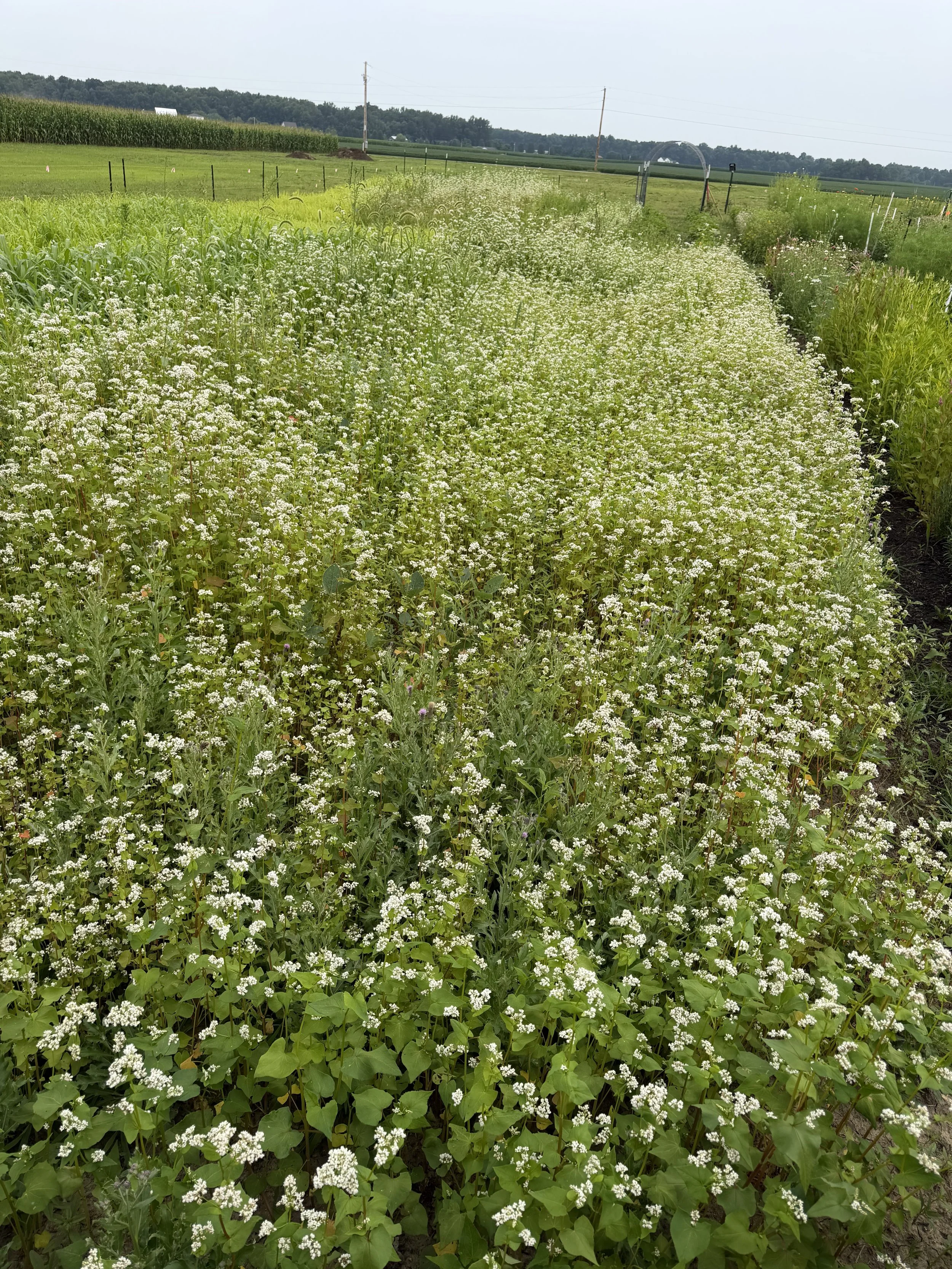
The entire east side of the property stayed wet and essentially not plantable all season. Rather than leave it completely unused, I planted buckwheat and sorghum-sudangrass as cover crops, hoping their roots would begin doing some of the work for us—adding organic matter and helping break through years of compaction.
The buckwheat turned out to be one of my favorite surprises of the season. It was beautiful, and it brought an incredible amount of beneficial insect life into the field. What started as a solution to a problem ended up being something I really enjoyed having on the farm. I was sad when I had to mow it down. (I have since learned that I could have used the flowers for bouquets as they have a pretty good vase life).
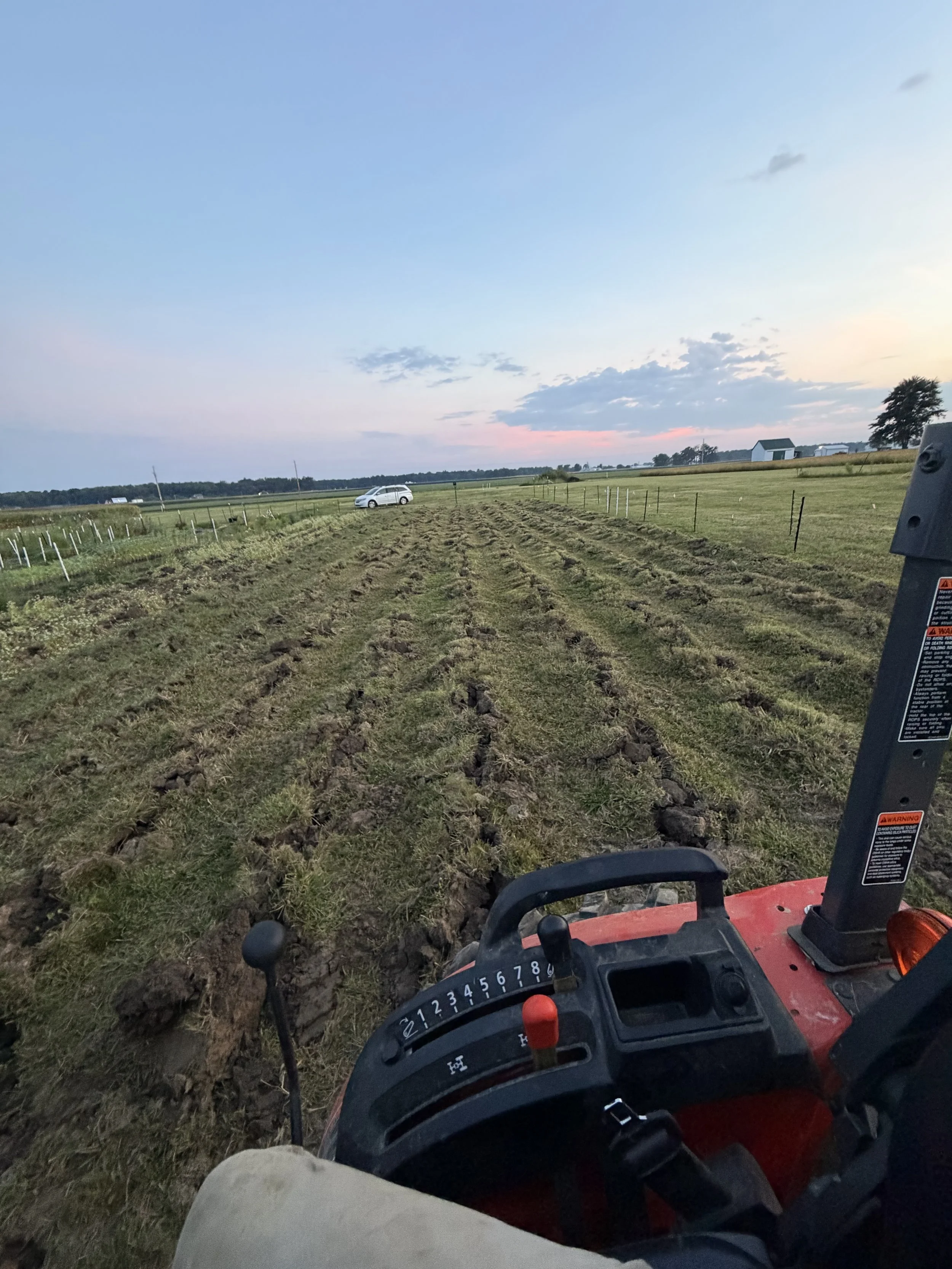
And then, sometime during what I believe was one of our few dry weeks of the entire summer, we finally had our chance.
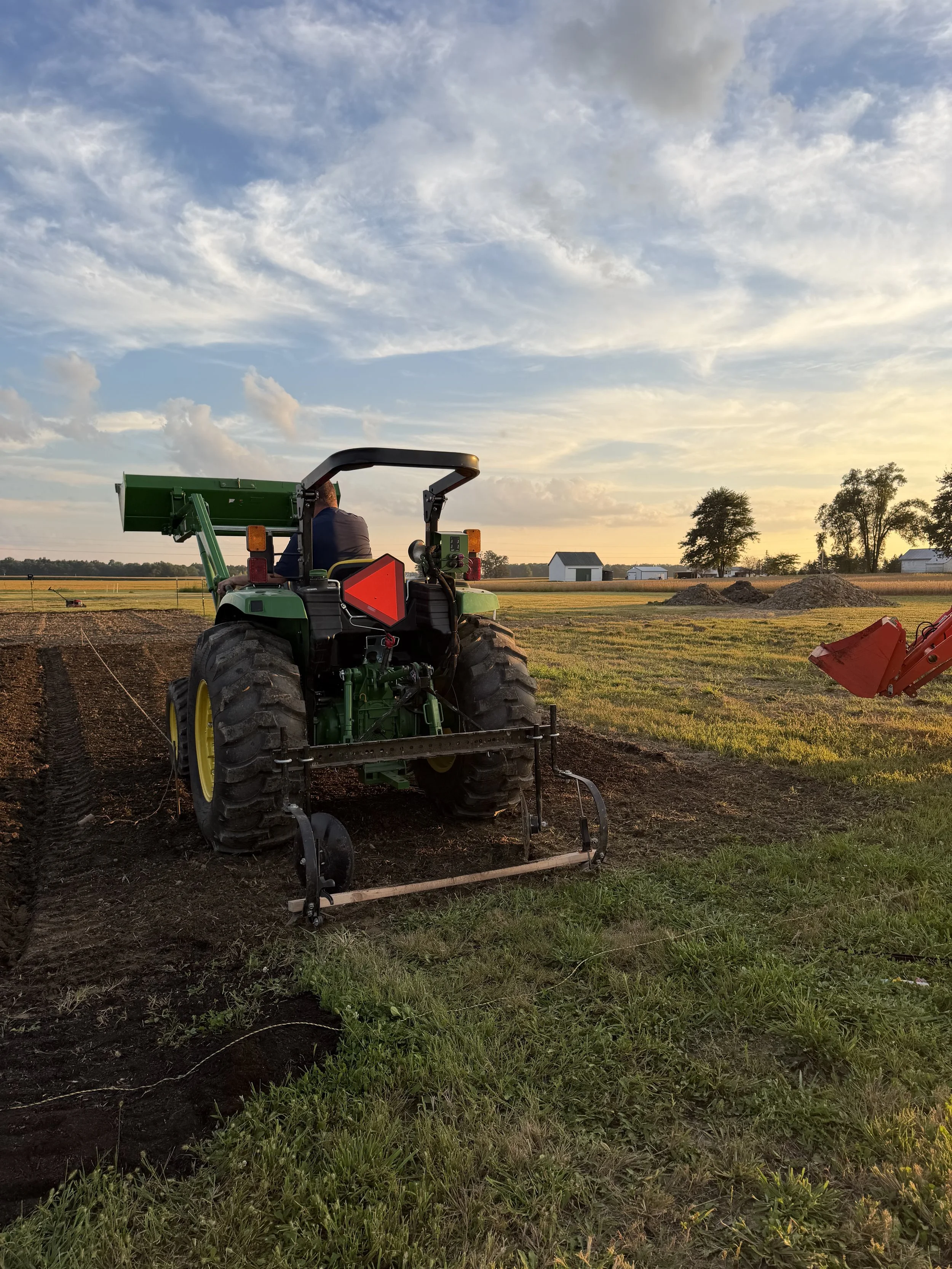
As we began expanding the flower field and laying out the space for next year, Adam jumped on the tractor and started subsoiling.
And let me tell you… He loved every minute of it! He was finally getting to do what he’d been talking about for months! 😂
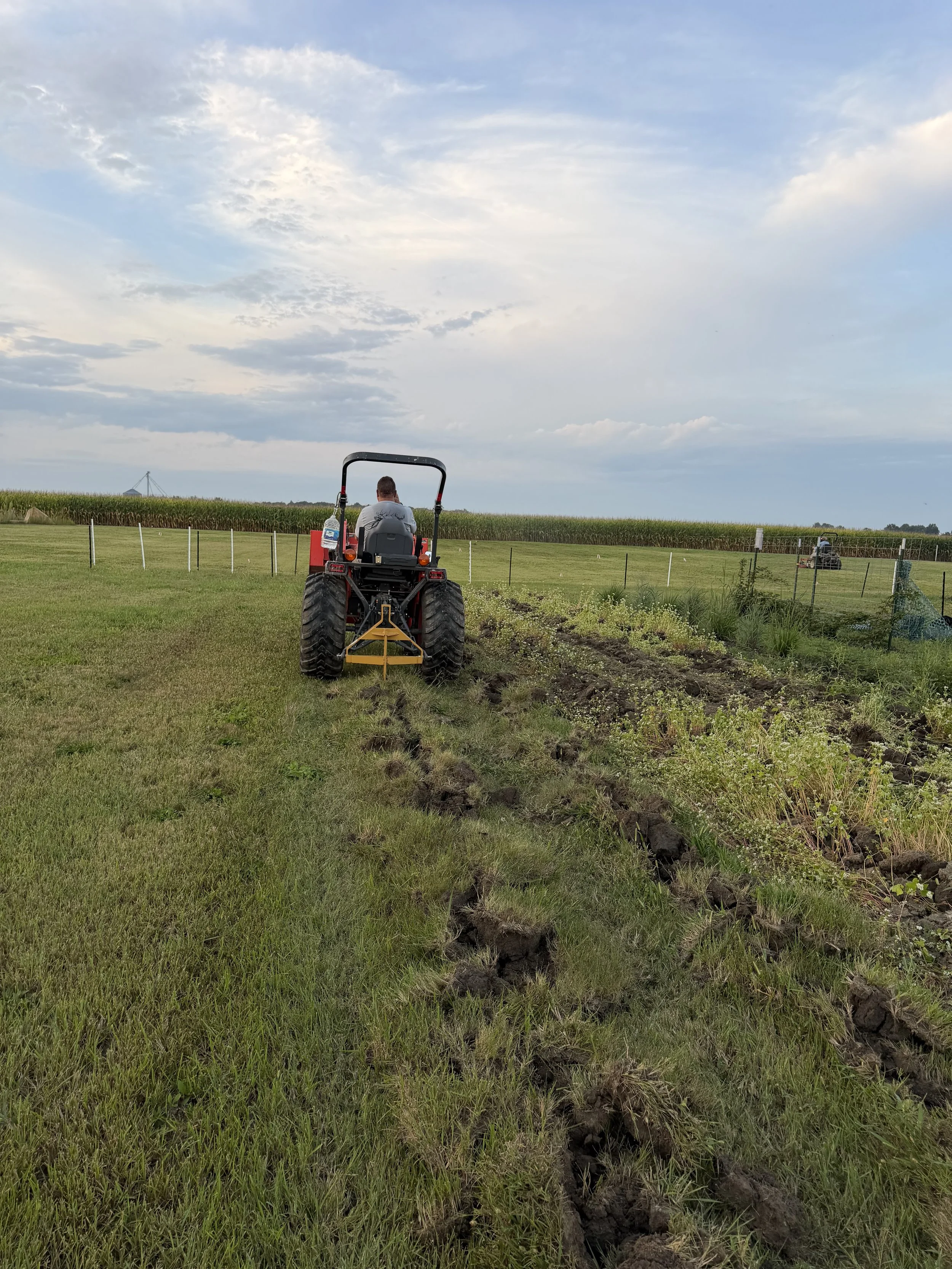
Slowly working his way up and down…and you will also notice in the top right of the photo — my sister, Amy, has kept our property mowed for us this season. She loves to mow and it has given us back so much time! We call her our mowing angel.😇
But We Weren’t Done Yet…
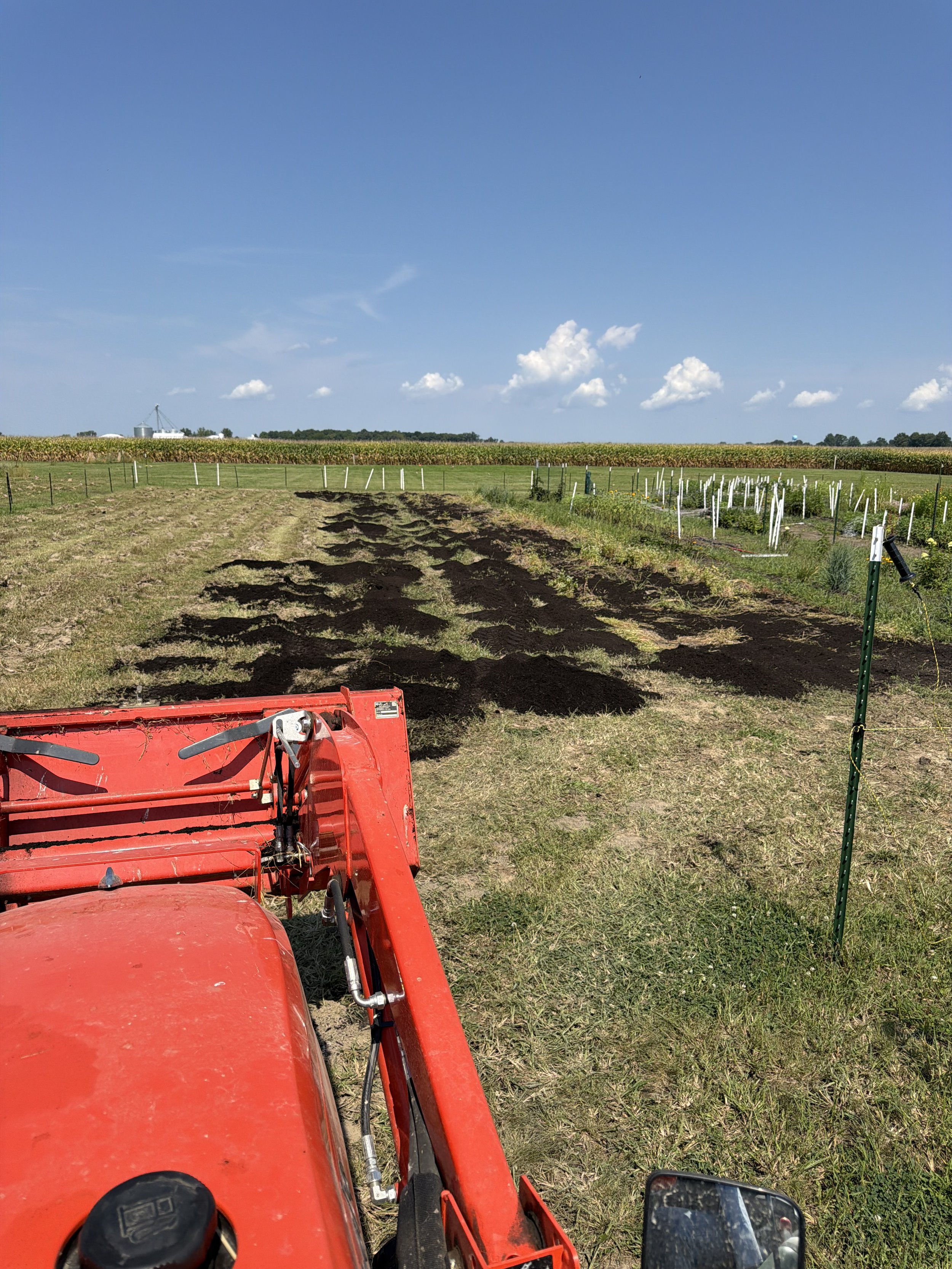
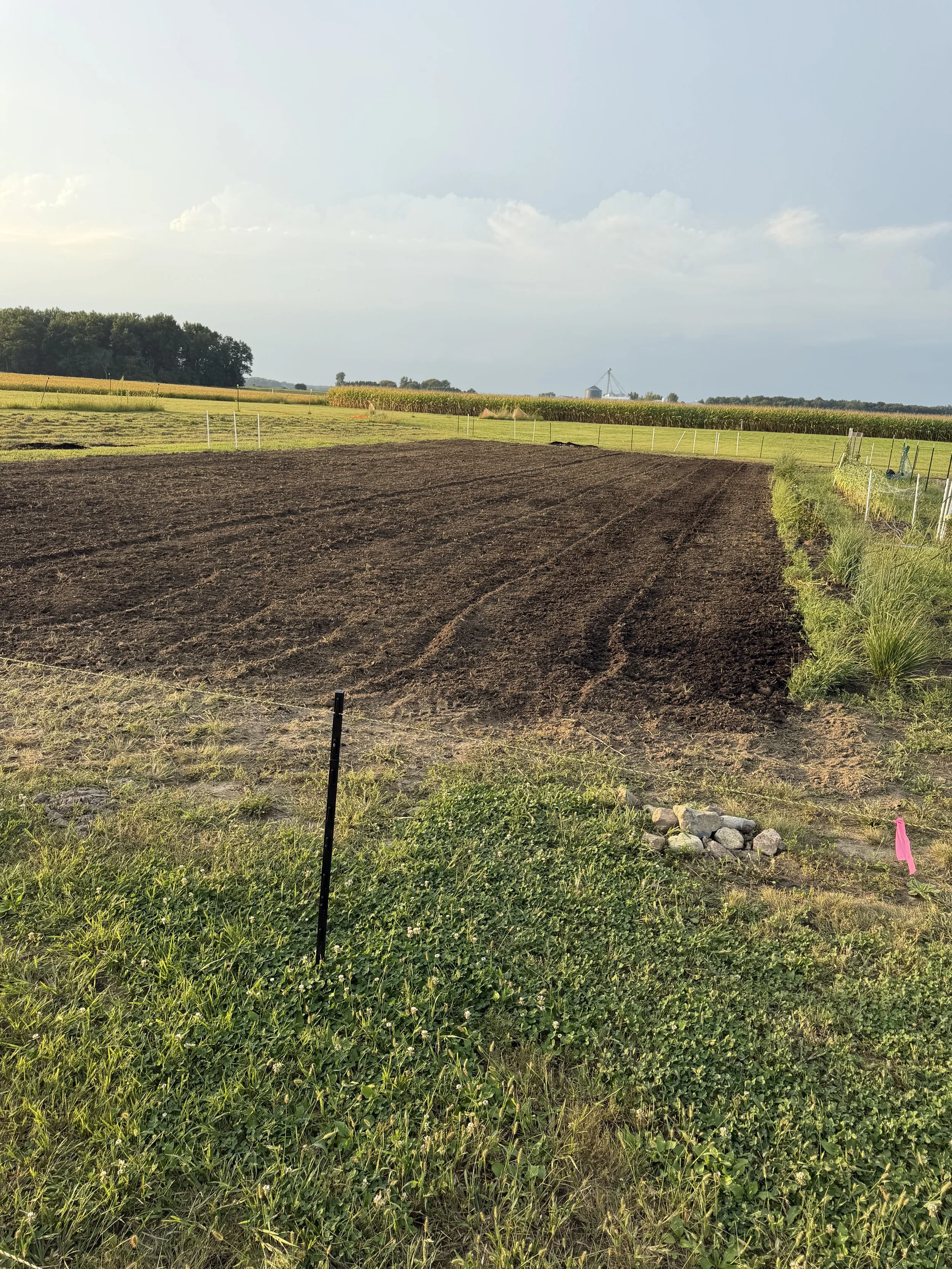
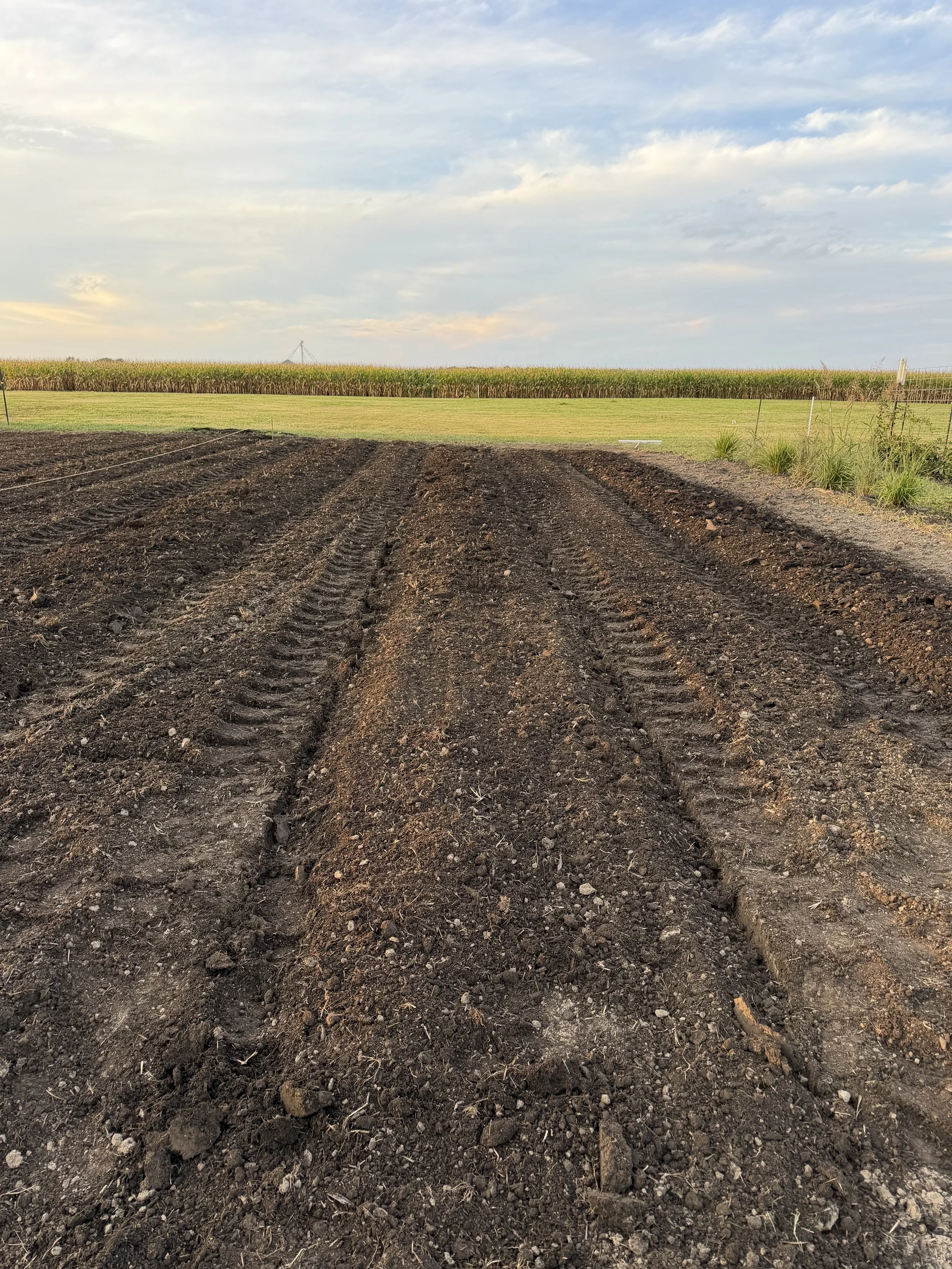
Once the subsoiling was finished, we brought in another 25 cubic yards of compost for the new growing area, tilled it in, and started planning out our new 100-foot beds.
And this is probably a good place to introduce my brother-in-law, Jay.
Jay is “that guy.”
You know the one. The guy who always has the tool, piece of equipment, or know-how needed to do just about all the things. He has been incredibly generous with his time and equipment over the years and has helped us over and over again, this time as we’ve tried to figure out drainage solutions.
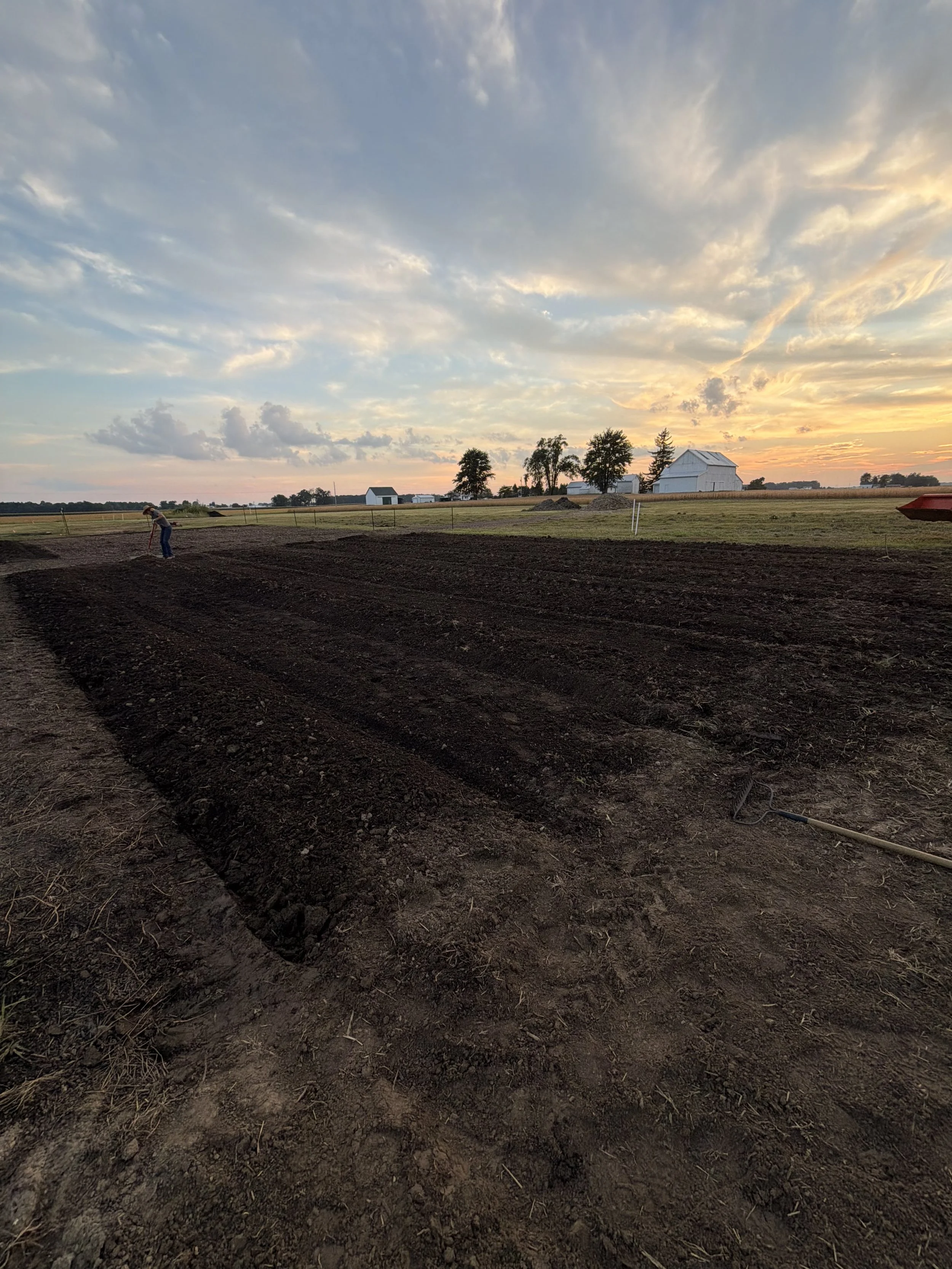
After looking at the way the land naturally lays, Adam and Jay came up with another piece of our drainage plan: a swale running east to west right through the middle of the flower field.
The north side of the field naturally slopes toward the middle, and the south side does the same. By creating a swale through the center, water from both directions would have somewhere to go instead of sitting in our flower beds.
So once again, we watched the weather and found a window between the rains.
Jay showed up with his Bobcat.
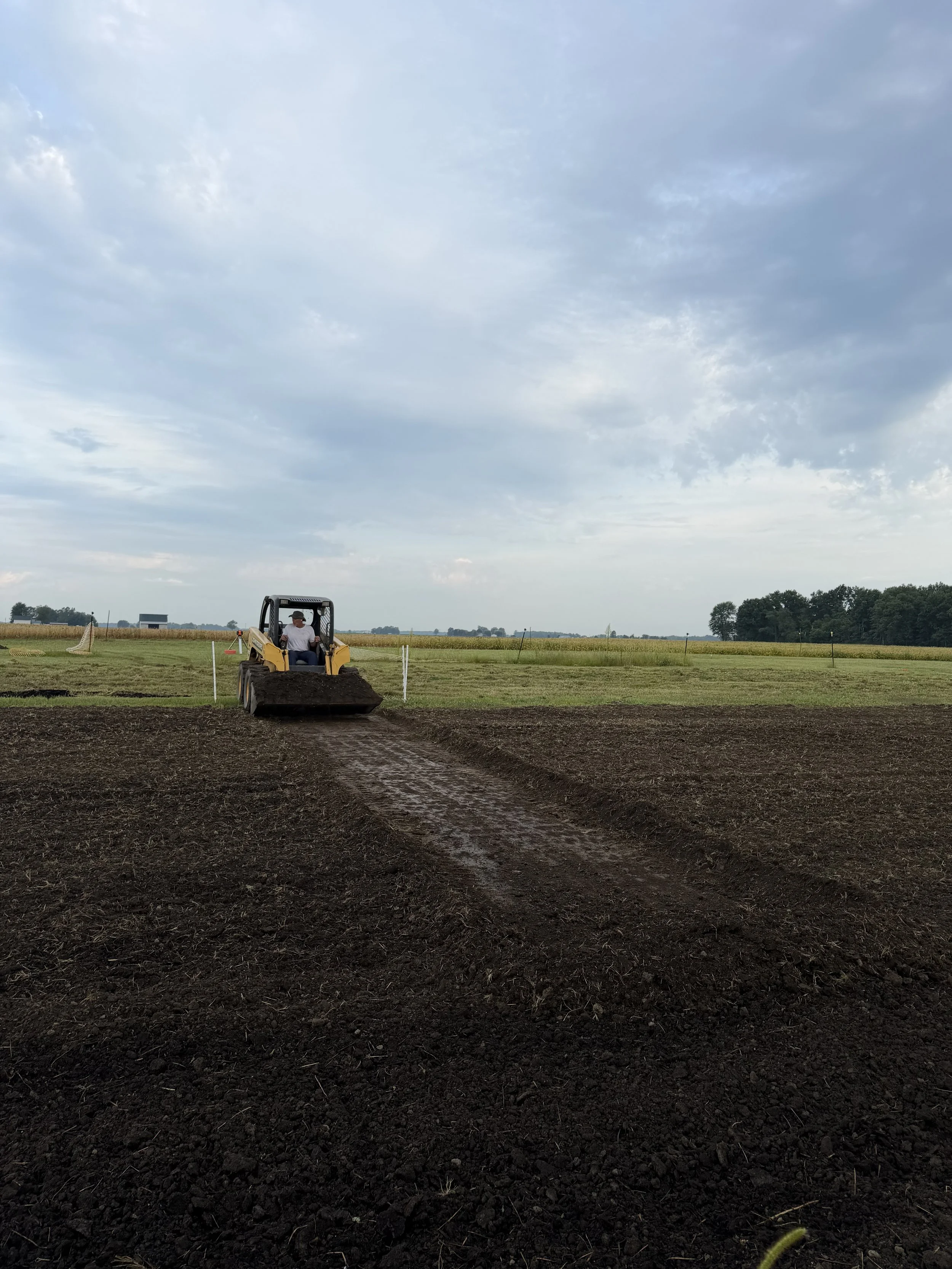
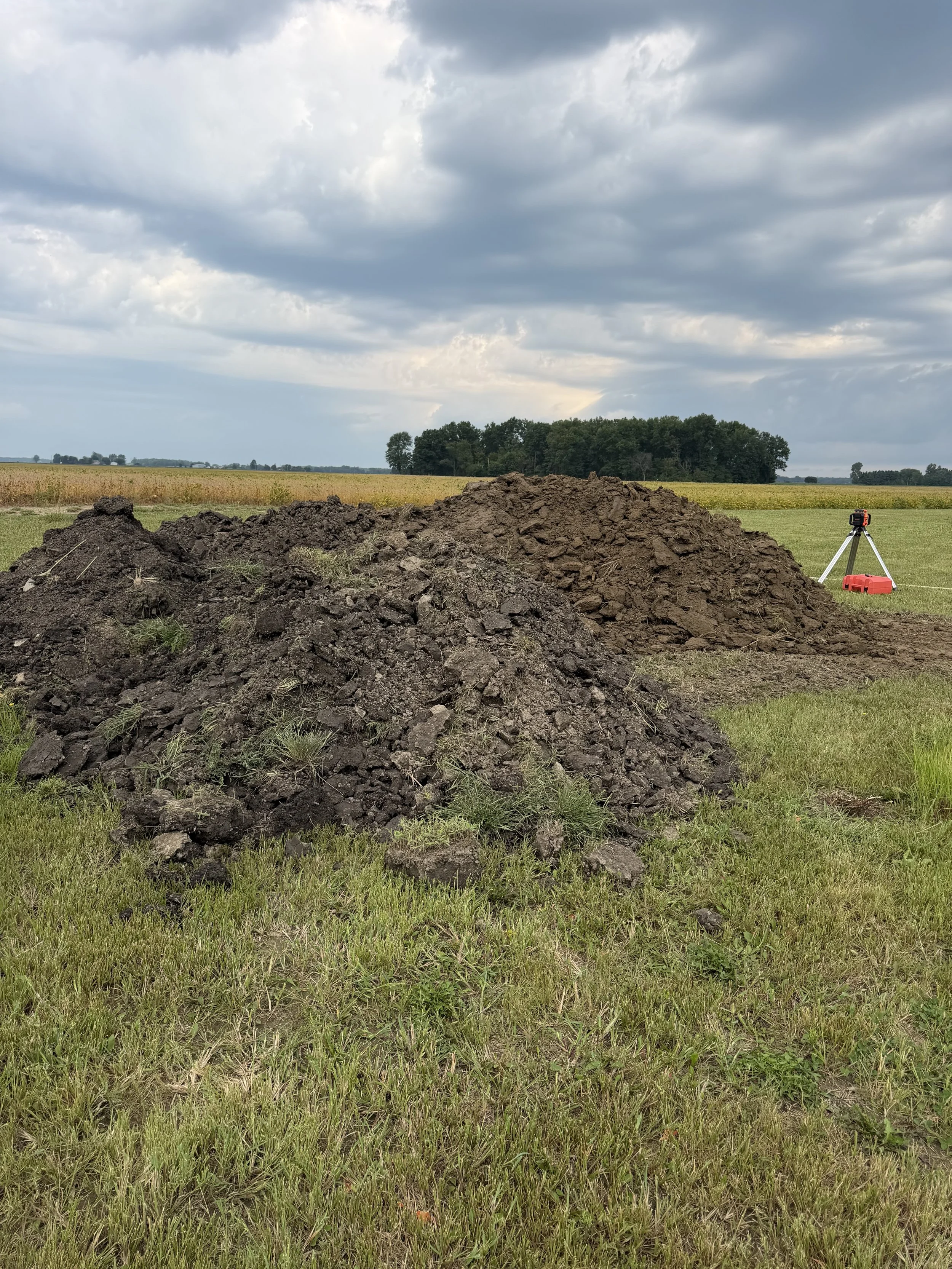
And moved a LOT of dirt.
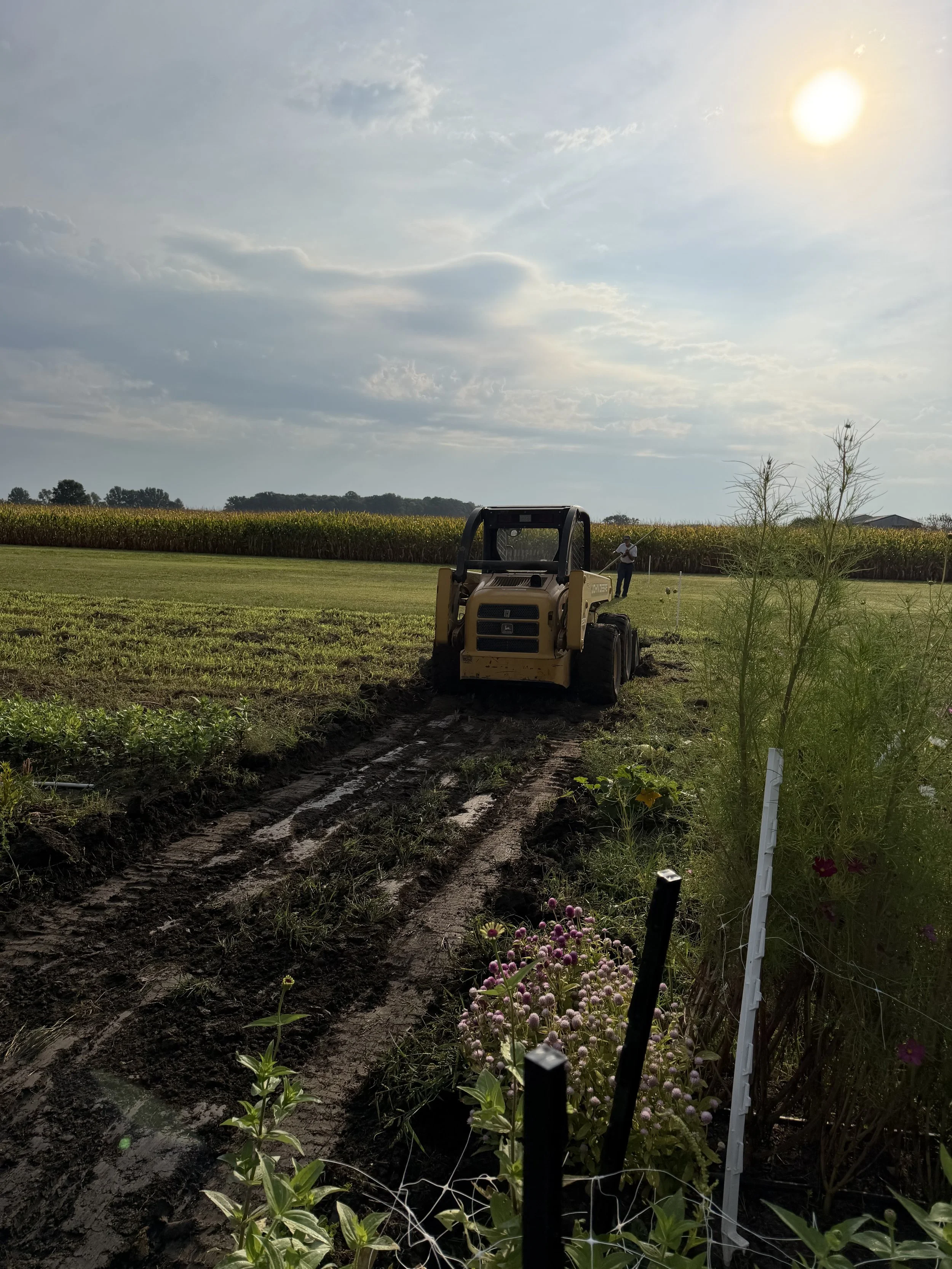
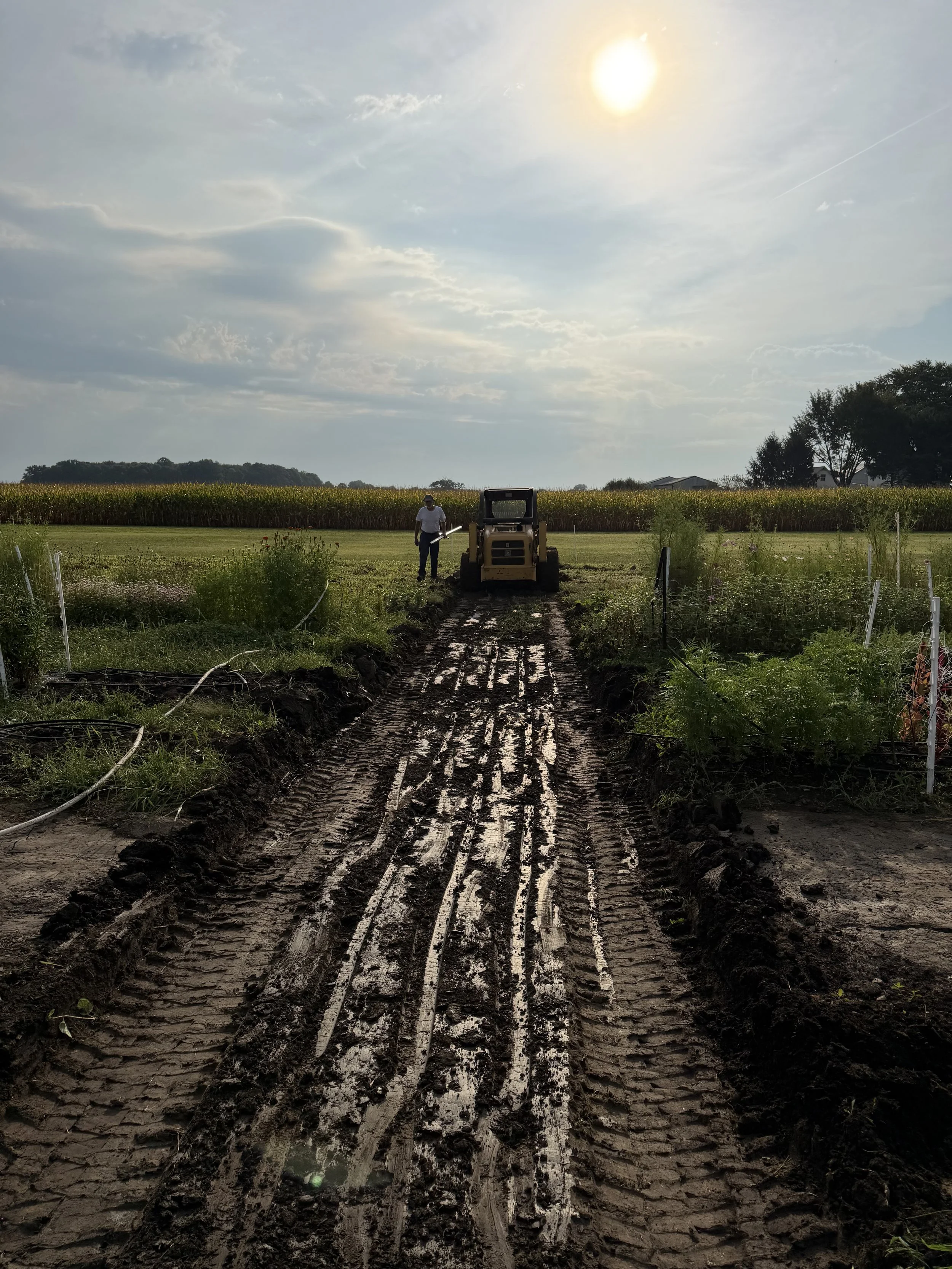
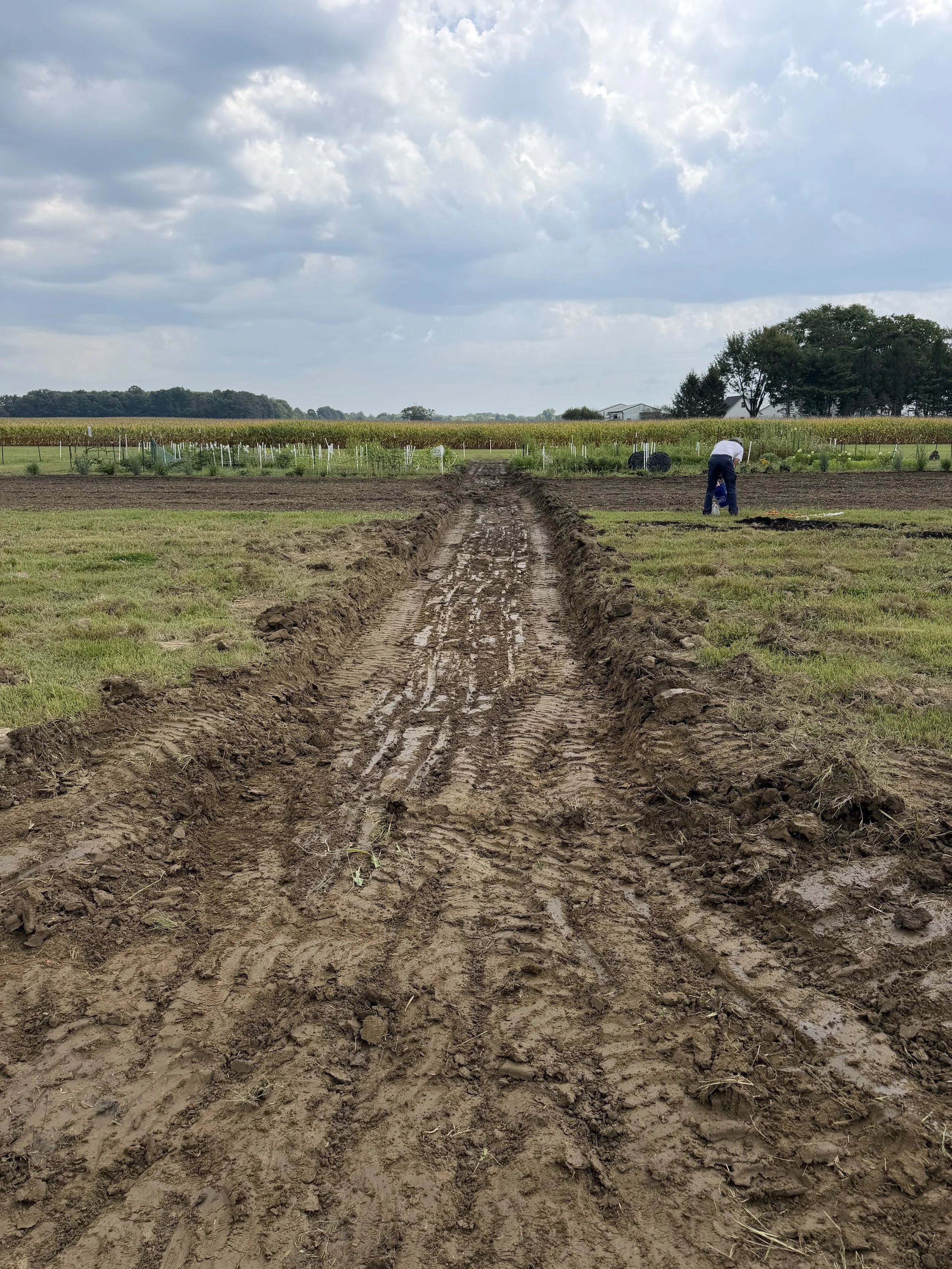
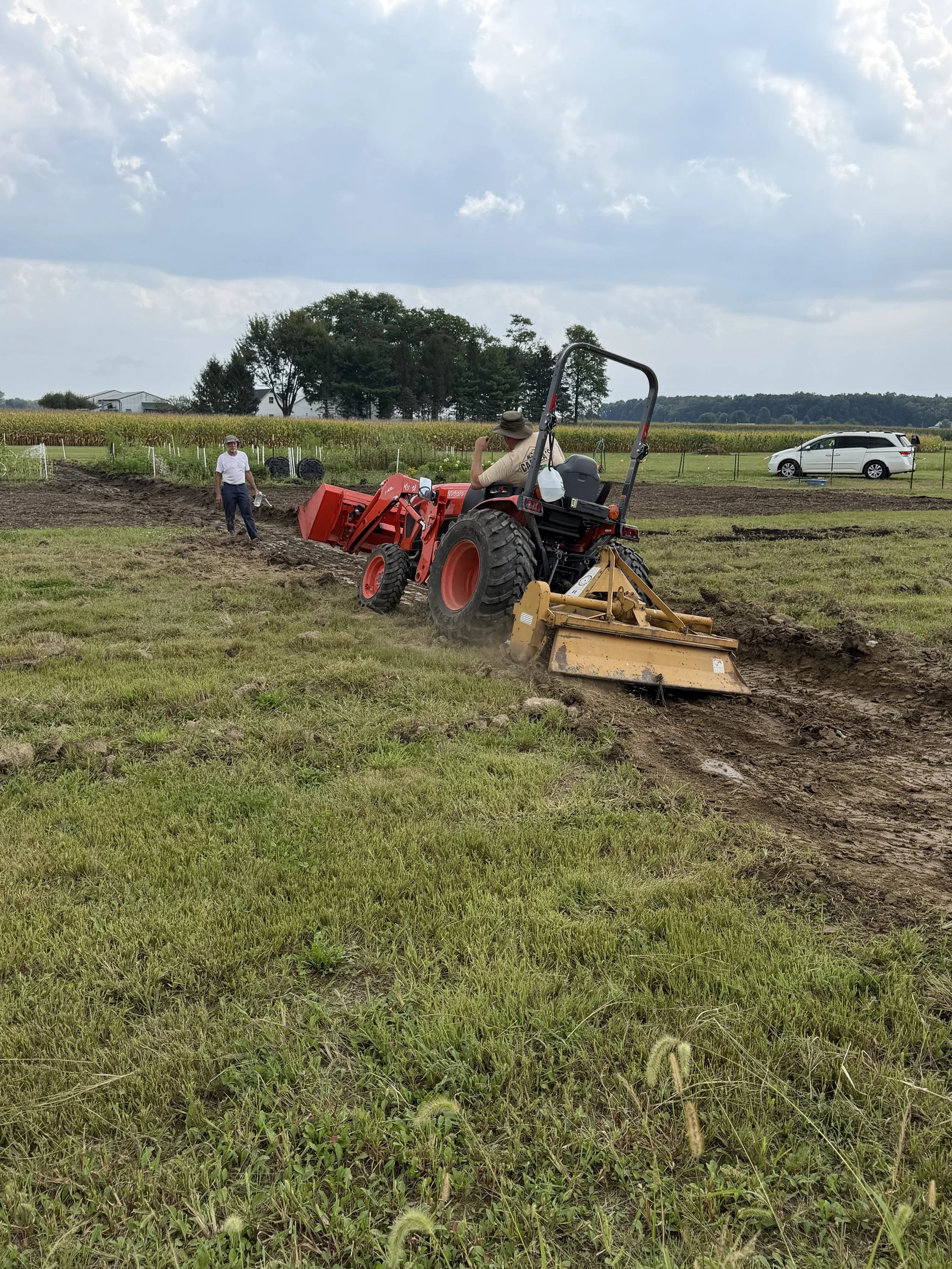
I am one blessed gal! By the end of the day, we had a drainage swale running right through the middle of the flower field.
And we didn’t have to wait long to test our work, Jay was literally loading the Bobcat back onto his trailer when the skies opened up.
It poured. And we watched the water run into that brand-new swale and fill it up. It worked!
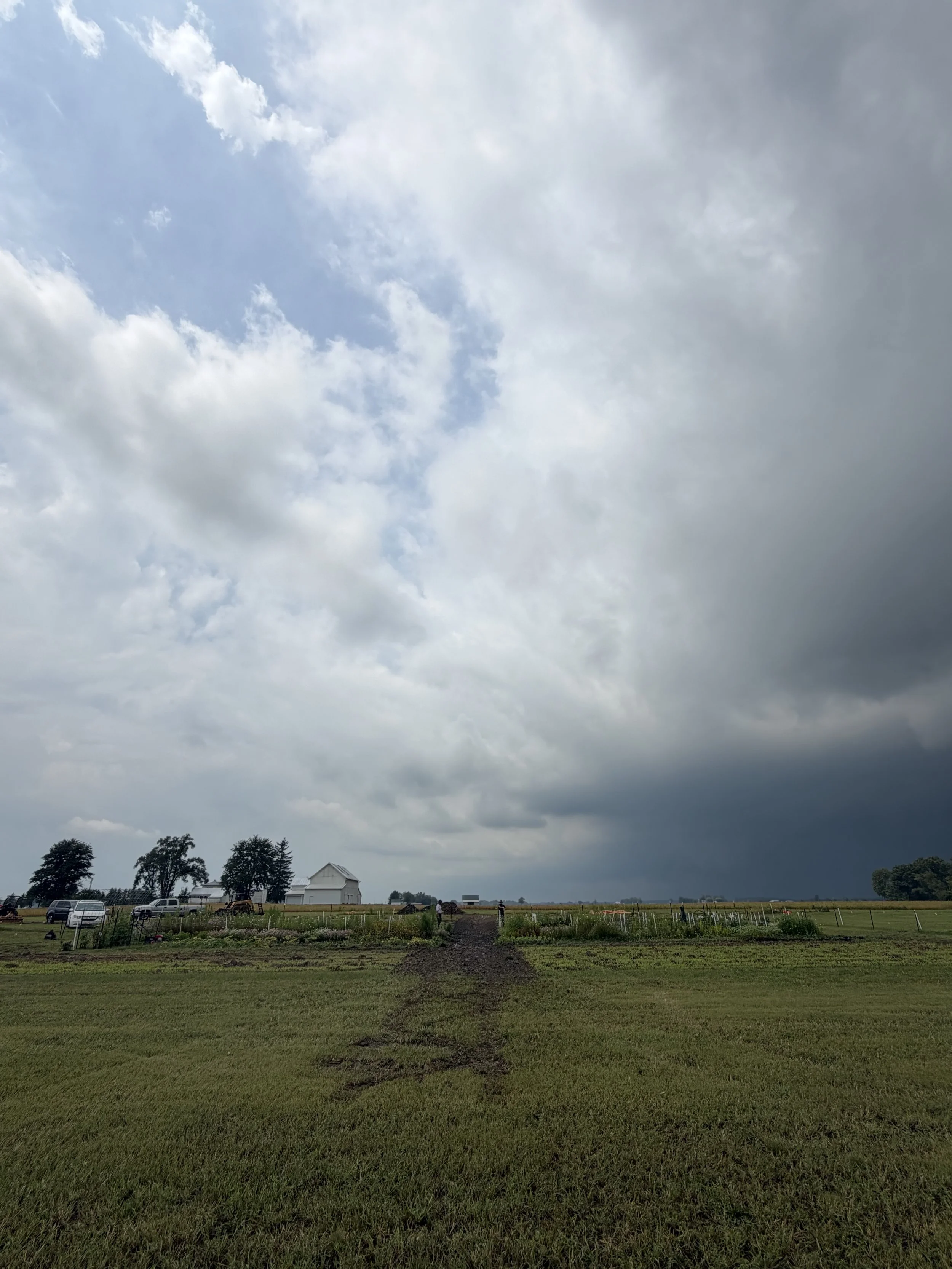
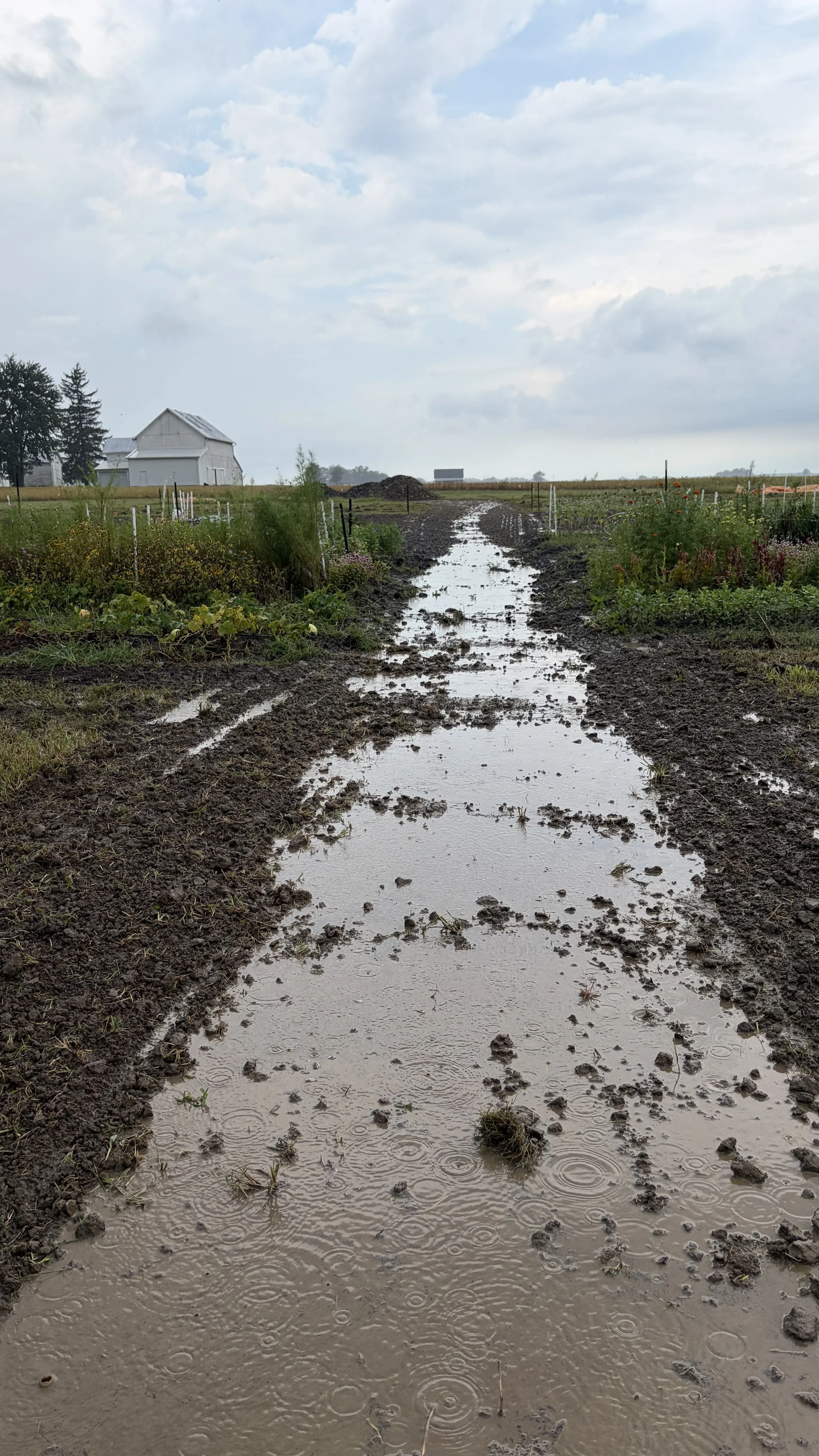
I can’t even tell you how exciting that was! Here we were, standing in the rain getting excited about water draining out of a field. 😂
Still a Work in Progress
We’re definitely not finished. We’ve created even more beds since then, and we still need to work on the slope of some of the aisles and clean up portions of the swale so everything moves the way we want it to.
But it seems to be working.
And maybe even more exciting—the areas we subsoiled are noticeably different. After a rain, they simply aren’t holding water the way they did before. Seeing that difference after spending an entire season battling wet ground has been pretty amazing.
There is still so much we don’t know. Every time I think we’re getting one piece of this flower-farming thing figured out, we are immediately on to researching and learning the next lesson.
But this year, one of the biggest lessons has definitely been how to deal with the water—where it comes from, where it goes. And apparently…how ridiculously happy you can become when it finally goes where you want it to. 😊
The journey continues...